AutomotivePrecision MachineryLeading Chinese automotive powertrain and turbocharger component supplier

Case Study

Solving Stamping Burrs in Turbocharger Vent Valve Plates with 304L Stainless Steel

A leading automotive powertrain component supplier needed to eliminate persistent burrs on a 304L stamped turbocharger valve plate, reducing manual rework and production risk.

Project Profile

Overview

Client Type
Leading Chinese automotive powertrain and turbocharger component supplier
Application
304L stainless steel stamped turbocharger vent valve plate
Service Scope
Burr root-cause review, 304L stainless steel selection, stamping sample support and production stability improvement

Measured Impact

Results Snapshot

Manual Deburring Removed
100%

The downstream manual deburring process was eliminated after switching to 304L.

Estimated Cost Reduction
15%

Customer-calculated unit manufacturing cost reduction after process simplification.

Material Upgrade
304L

Lower-carbon stainless steel improved stamping edge quality while maintaining the required corrosion resistance.

Customer Challenge

Customer Challenge

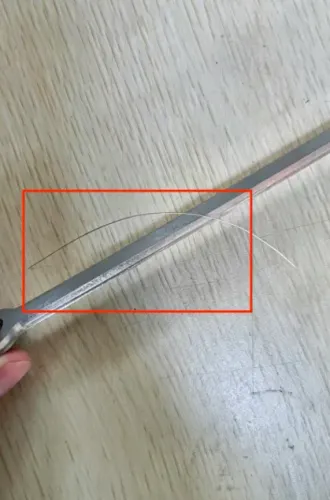
The customer was a leading Chinese automotive powertrain and turbocharger component supplier. On a stamped turbocharger vent valve plate, parts made from the original supplier’s material showed persistent burrs along the formed edge.

The issue was not only cosmetic. Burrs required manual deburring, added rework, increased production uncertainty and reduced confidence in the existing material route.
Technical Analysis

Root Cause Analysis

Our technical team reviewed the application, forming route and cost target with the customer. The part required corrosion resistance, dimensional accuracy and moderate strength, but it was not an extreme high-temperature or high-strength component. The main process risk was stamping formability and edge quality. Standard 304 stainless steel, with higher allowable carbon content than 304L, can show stronger work-hardening tendency during stamping, increasing local brittleness at the sheared edge and making burrs or micro-cracks more likely.

Material Solution

Material Solution

We recommended replacing 304 with 304L stainless steel. 304L is the low-carbon version of 304, with a lower carbon limit that improves ductility and reduces work-hardening tendency during forming. The change was positioned not as a material-price discussion, but as a total manufacturing cost solution: improve the front-end material choice to remove the expensive downstream manual finishing process.

Results

Results & Value Created

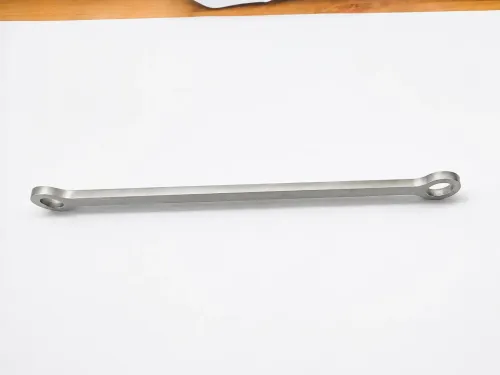
After switching to the 304L stainless steel route supplied by HydroPlatide, the formed parts showed a clean appearance with no visible burrs. The customer was able to remove the manual deburring step and stabilize production of the valve plate.

The case shows that, for turbocharger stamped parts, material selection should not be judged only by nominal grade. Real cutting, forming and tool-wear behavior determine whether production can stay stable.

Key Insight

Case Insight

This case shows why material selection should be based on application and processing route, not only on the requested grade. By helping the customer move from material unit price thinking to total manufacturing cost thinking, the project turned a stamping defect into a stable cost-saving process improvement.

Project Gallery

Images

Close-up of a wire-edge burr on the sheared edge of a stamped 304 stainless steel connecting plate
Parts made from the customer's original supplier material showed burrs along the formed edge.
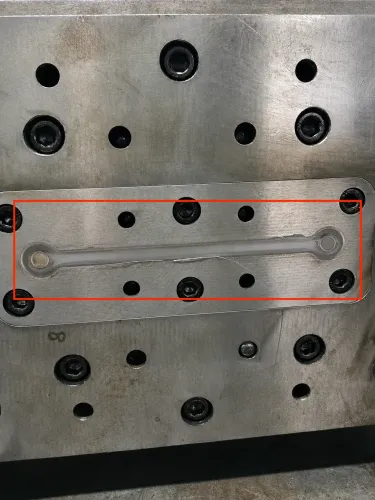
Stamped stainless steel connecting plate inside the blanking die, showing burr formation along the shear edge
After producing just over 2,000 pieces, the machine cutting edge was already worn.
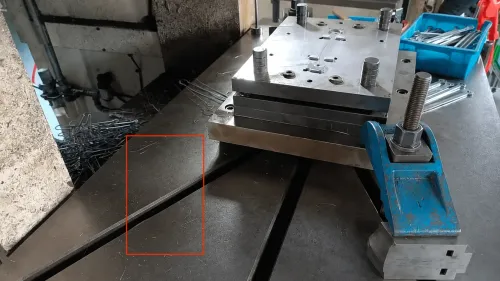
Stamping die set on the press table with burr slivers scattered around stamped stainless steel parts
Manual deburring was required to remove burrs from the stamped parts.
Finished turbocharger vent valve connecting plate stamped from 304L stainless steel with clean, burr-free edges
After switching to material supplied by HydroPlatide, the formed parts had a clean appearance with no burrs.